Wall Street South: Is Miami Becoming America’s Next Financial Capital?
When billionaire Ken Griffin announced he was moving Citadel, one of the world’s most profitable hedge funds, from Chicago to Miami, commentators compared it to LeBron James leaving Cleveland for the Miami Heat in 2010. Wall Street’s elite had been visiting Florida for years. Now they were moving in. benzinga
What’s driving it
Taxes. The simplest explanation is also the biggest. Florida has no state income tax, while New York’s top marginal rate exceeds 10%, which is a powerful incentive for people whose incomes run into the tens or hundreds of millions. stockpil
Remote work and lifestyle. The pandemic made physical proximity to Wall Street less essential, and firms found that newer office space, lower taxes, and year-round outdoor living were a strong pull for employees. stockpilmanhattanmiami
A gateway to the Americas. Miami already had a banking base: more than 60 international banks operate there, making it the largest banking hub in the U.S. beaconcouncil
Who’s there
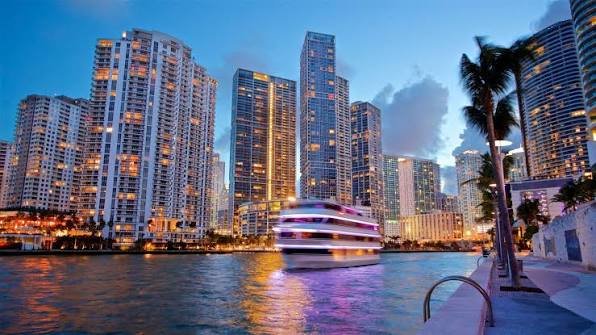
Citadel is the anchor. It will occupy about 561,000 square feet of a new 1.7-million-square-foot tower at 1201 Brickell Bay Drive, a roughly $2.5 billion project, a few blocks from its current headquarters. Millennium, Balyasny, Starwood Capital, D1 Capital Partners, and Virtu Financial have also established a presence, and Point72, RBC Capital Markets, and Thoma Bravo have offices or headquarters in Florida. Newcomers keep growing: Citadel and wealth firm Corient both expanded their leases at 830 Brickell before the tower even opened. Miami business news: Citadel supersizes its Miami HQ – caa +3
Why it matters
The numbers show real momentum. Finance and insurance contribute $27.7 billion a year to Miami-Dade’s economy, and the Economist reported that metro Miami’s GDP grew 23% between 2020 and 2024, outpacing the national average. For the industry, a second major hub means more competition for talent, capital, and policy attention than the New York-London duopoly. beaconcouncilstreamlinefeed
The effect on the community
The benefits reach beyond office towers:
- Jobs and investment. Construction and permanent roles are spreading across the region. Citadel alone says it has more than 400 colleagues based in Miami. hoodline
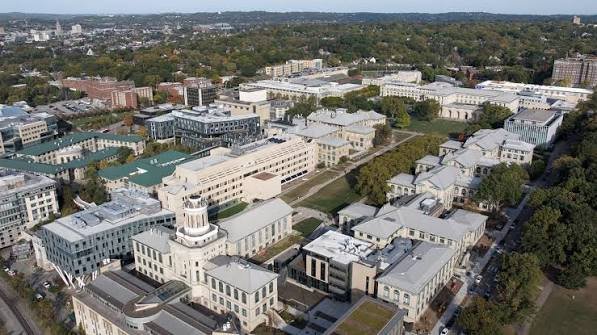
- Education. The record $3 billion Griffin gift to Carnegie Mellon includes $2 billion for a new 35-acre campus in the Wynwood neighborhood, bringing a major computer science institution to the city. foxbusiness
- Healthcare and philanthropy. Griffin has also given $25 million toward a new surgical tower at Nicklaus Children’s Hospital in Miami. scmp
- Housing investment. The pressure has pushed developers toward new projects: workforce and affordable housing is seeing its biggest development surge in decades, and Florida’s Live Local Act has already produced thousands of units statewide. molkaepelboim
The reality check
Miami isn’t there yet. Its labor market is smaller and less specialized than New York’s, and many firms keep their primary headquarters in Manhattan while opening large second offices in Miami. Even Citadel trimmed its Miami investing staff by 15 while its global team grew, because senior talent still clusters in New York and London. And the boom has a cost for residents: nearly half of Miami households are considered rent-burdened. Miami Lured New York’s Billionaires. Can It Now Lure Their Businesses? +2
The bottom line
Miami probably won’t replace Wall Street, but it doesn’t need to. If it becomes a lasting second center of gravity, with the people, the schools, and the housing to match, it will have changed American finance. The next few years will show whether this is a permanent shift or a very expensive migration.